
DIY Activity: Catching Colors
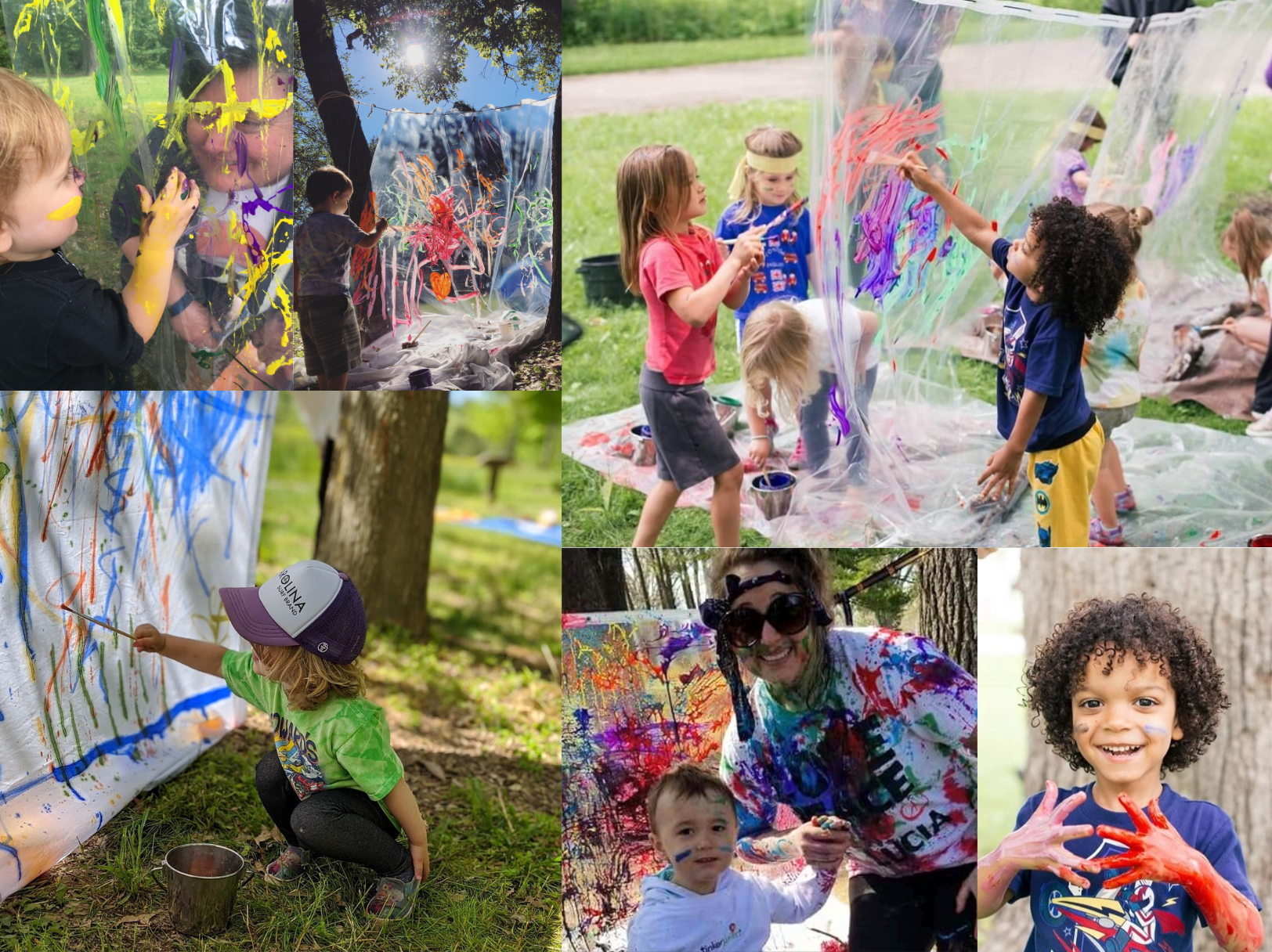
There are few activities that are as liberating and satisfying as painting on a giant canvas. In this activity, inspired by a marvelous book about a vibrant character who can tame wild colors, kids will free colors and create a whirling, swirling outdoor masterpiece.
Watching color splash up on an outdoor canvas, feeling it swirl and whirl around, and being welcome to have at it are all the makings for joyful, engaging play—the kind of free and messy play that paves the way for a creative future.
Video Lesson
If you’d like, watch this 10-minute “Catching Colors” video lesson to inspire playful learning. And/or, follow the steps below.
How To
Step 1: Prep your materials.
Pour different colors of tempera or nature-based paint one third to halfway into mason jars, or other containers.
Gather something that can be used as a canvas. This could be a giant piece of paper, an old bed sheet or shower curtain liner. If you are offering washable paint, you can also paint directly on a mirror, glass door, or window.
Find a spot outside to set out your paints, a paintbrush and your canvas. You can lay your canvas down on the ground or use twine to tie it up between two trees. No matter where you string or lay it, try to put a sheet, towel, tarp or some newspaper down underneath so you don’t leave too much paint on the earth.
Step 2: Give kids an invitation to create.
For a little extra inspiration, read or watch one of our favorites, Swatch: The Girl Who Loved Color by Julia Denos.
Or, jump right into play by discovering your painting supplies together. Marvel at all of the colors inside the jars. Enjoy describing the colors and even naming them, too!
Then, invite kids to free the colors onto the canvas. You can say something like, "Do you think we could free these colors from their jars by painting them onto this canvas?"
Step 3: Free the colors (and yourselves)!
Welcome kids to free the colors and have at it! Explore new ways of painting (with hands, sticks, leaves, and elbows). Take a step back and let them get as messy and creative as they want. To support the art-making process (rather than final product) use “I notice” statements like “I notice you are making big strokes with your paintbrush.”
Extend Play.
When play is wrapping up, take a moment to behold your masterpiece with joy! Then, try some of these ideas to keep the play going:
Color mixing: How can kids make new colors? What happens when kids blend a couple of colors together in a bucket or dilute paint with some water?
Catch nature colors: Hand kids an empty jar and invite them to “catch” colorful nature treasures in their outdoor space. Then, free them back to nature!
Revisit your canvas: Often with kids’ art-making, we consider the artwork to be finished once kids are ready to move on to another activity. To help kids lean into the process of art-making, invite them to add to and iterate on their masterpiece over time. When play is wrapping up, set the canvas aside to dry. Later, set it out again with art materials and invite kids to layer on more color.
Why is this activity great for kids?
When we are able to think and act freely, we become open to discover new possibilities and invent new things. This activity also gives kids and us an opportunity to support and celebrate the process of art-making more than just the final product. Kids also stimulate multiple senses, activate behavioral schema (i.e. transforming, connecting and rotation), and problem solving skills.
