
A Better A-Word in Parenting?

I read Jonathan T. Rothwell’s recent post, The Parenting Trap in the After Babel Substack. It lays out a clear cut case for a pendulum swing from permissive parenting back toward “authoritative parenting,” especially when it comes to limiting social media and harmful technology for kids. Though there’s much to take away, I was left wanting to emphasize other, even more important “A-words” in my parenting.
A validating start.
On my first read, both the educator and parent in me felt stimulated and a bit seen. I often worry I’m not taking a strong enough stand, and the stakes feel so high.
As a classroom teacher then school principal in the early Aughts, I witnessed plenty of permissive parenting gone too far—from demands that a late essay receive full credit, to parents who admitted to me, sheepishly, that they had no idea how to say “no” to their middle schooler (something my own parents rarely seemed to struggle with). Most of us can relate. What parent hasn’t tried to rationalize and reason far too long when your toddler simply needed to be scooped up and carried away?
Rothwell’s data on shifting parenting priorities are also very compelling, and I am 100% behind statements like, “Most people would likely agree that obedience to laws and basic social norms of decency and mutual respect remain important”—especially as those norms feel like they’re unraveling daily.
As I reread the post, though the initial feeling of validation shifted into wonder, even unease. This felt like an article to question. And the questions kept coming.
First: obedience?
This word popped right out. Even though Rothwell acknowledges that the word has negative connotations, it still doesn’t feel right for this moment. In a time when it’s increasingly hard to know which sources of information to trust, “obedience” to authority would not be the first skill I’d wish for my kids.
The term also echoes what education reformers call “horizon one”—the legacy education-and-economy system built to produce a compliant labor force, not the generation who will soon need to reinvent what work even means.
Today, forward-looking models of learning emphasize agency and autonomy. In The Third Horizon of Learning, Getting Smart argues that, in an age of AI and automation, young people need “agency, adaptability, creativity, critical thinking, and the ability to learn, unlearn, and relearn.” It’s hard to argue that any of those flourish under obedience-first thinking.
The wrong A-word.

What bothered me even more was how another A-word—autonomy—was not only underrepresented in the piece, it was framed as the problem. The post suggests parenting started to go wrong when “parents increasingly came to value autonomy over obedience.”
It might be tidy to pit autonomy and obedience against each other—but must we? And, in this current moment in human history, should we?
Why the binary extremes?
My career and parenting life have been full of dizzying pendulum swings: whole language vs. phonics, attachment parenting vs. sleep training…on and on. After all the whiplash, I long for agreement that the best answers rarely live at either extreme. The truth is, they most often live in the blend.
Yes, phonics matter. And yes, kids also need rich literature and language to fully become a reader.
The same is true of autonomy and structure. Kids need guardrails. But kids, especially adolescents, also need autonomy. They need to feel capable, trusted, and respected. They also need experience doing things for themselves, making their own choices, and feeling the consequences, good and bad.
Isn’t supporting autonomy important…and effective?
This question led me back to some of my favorite recent reads.
In The Breakthrough Years, Ellen Galinsky focuses on the term agency, which she defines as “the need for autonomy and respect,” as an essential psychological need of adolescence. She also points to “autonomy supportive” parenting as a promising means to support agency which, as she writes, “includes both autonomy and structure,” not as either/ors but as both, together.
Galinsky supports this perspective, in part, with decades of research from Wendy Grolnick. Grolnick asserts, “We need to feel autonomous…like we’re the owner of our actions and not pushed or coerced.” Her work demonstrates that kids thrive not when parents control everything, but when parents create the conditions for autonomous motivation. Grolnick distinguishes:
Autonomy-supportive parenting → listening, offering meaningful choices, taking the child’s perspective, encouraging initiative.
Controlling parenting → pressure, guilt, rigid rewards/punishments that undermine internal motivation.
Grolnick’s studies repeatedly indicate that autonomy-supportive parenting predicts better well-being, self-regulation, engagement, and resilience. As she puts it:
Jenny Anderson and Rebecca Winthrop build on these ideas in The Disengaged Teen, showing how kids benefit most from autonomy-supportive environments, both in school and at home.
And, if we’re really hoping to limit harmful behaviors, David Yeager demonstrates that, from smoking to bullying to teen health, authoritative, top-down interventions have repeatedly failed—often backfiring famously. What works? Approaches that respect adolescents and honor their autonomy.
Are parents really less demanding—or demanding in a whole new way?
Another question stuck with me. The article uses a common two-dimensional model of parenting—responsiveness crossed with demandingness—and concludes that today’s parents have become too low in demandingness.
That resonates in many ways, and the data bears out with kids spending more time on activities their parents wish they were not engaged in (e.g. social media) and less time on activities associated with thriving (e.g. hobbies, paid jobs, schoolwork).
I’m concerned, though, that to say parents are not demanding is to obscure a new, more subtle and very powerful force in parenting. Plenty of parents, in an earnest effort to give their kids opportunities (like access to higher education), exert a different kind of demandingness—the pressure to perform without the chance to really contribute.
This includes pressure to perform academically, in sports, and in a wide range of extra curricular/resume building activities. Each of these are ways to “stand out” and achieve deferred future success (i.e. college acceptance), but few to none of them involve opportunities to contribute right now to the family or community in meaningful ways.
This may be just as harmful as a lack of enforced respect ever could be. For example, this very recent study from the UK highlights the dangerous link between school pressure and self harm.
To top it off, all of this pushing kids to perform is happening within a broader system that, increasingly, cannot promise to reward those performances.
A better set of demands?
Maybe what we really need is a better set of demands—something more than old-school obedience or command performances. What if we give kids meaningful chances to do real things, to contribute, and to matter?
We could take inspiration from Andrew Fuligni’s work, which consistently shows that “family obligation”—the belief in and behaviors associated with assisting, respecting, and materially supporting your family—can be a powerful developmental asset for adolescents, as long as they are not paired with overwhelming burden or stress. As long as kids have agency–the combination of autonomy and the support they need from a loving adult.
To circle back to the issue at hand—navigating a world of digital media—what if we focus less on obedience and more on including kids in identifying, setting and maintaining limits for themselves? Better yet, what if they are part of setting and holding limits for the whole family? Parent/caregiver media use is inextricably tied to kid’s experience of media and their development of healthy habits and strategies.
A more balanced “triple threat” approach.
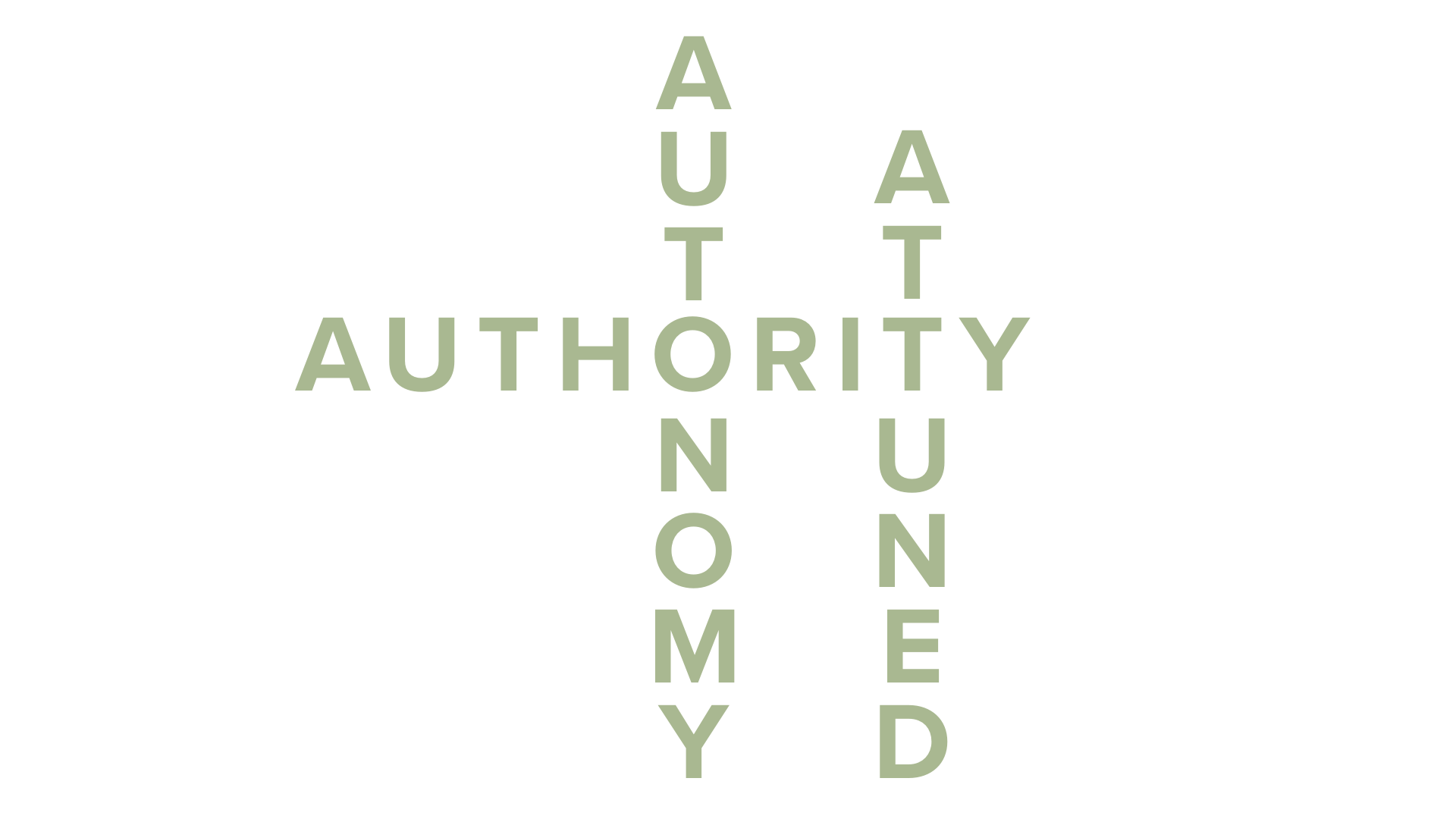
Maybe it’s the basketball season talking (a big deal in our house), but I feel like it’s time to move beyond the old 2-D model of responsiveness + demandingness. How about a three-dimensional, more balanced set of parenting qualities—the three A’s:
Authoritative → intentional limits, structure and respectful wisdom
Attuned/Responsive → warm, attuned responses to kids’ needs
Autonomy Supportive → supporting of kids need for agency and respect
Not as competing forces, but as elegantly woven partners. I don’t see how we can prepare kids for the future without appropriate doses of all three.
What now?
So where does that leave us? Hopefully, we’re left asking new, better questions. How can we find and develop ways to give our kids the structure, support, and autonomy they so desperately need? What role can kids play, and how can we be there to set limits and nurture their needs for respect, trust and agency?
It might seem (and be) more complicated to take this path than to simply swing back to a singular focus on authority, but it feels like the only way to truly prepare kids to thrive.
